Hair Extensions Specialists

Every method, explained

Nine ways to attach extensions, grouped into tape, strand and bond, weft systems, and removable pieces. For each: how it attaches, how long it lasts, who it suits, and what it asks of your routine.

Tape systems

Thin adhesive-backed wefts pressed on either side of a slice of your own hair. Flat, fast and reusable.

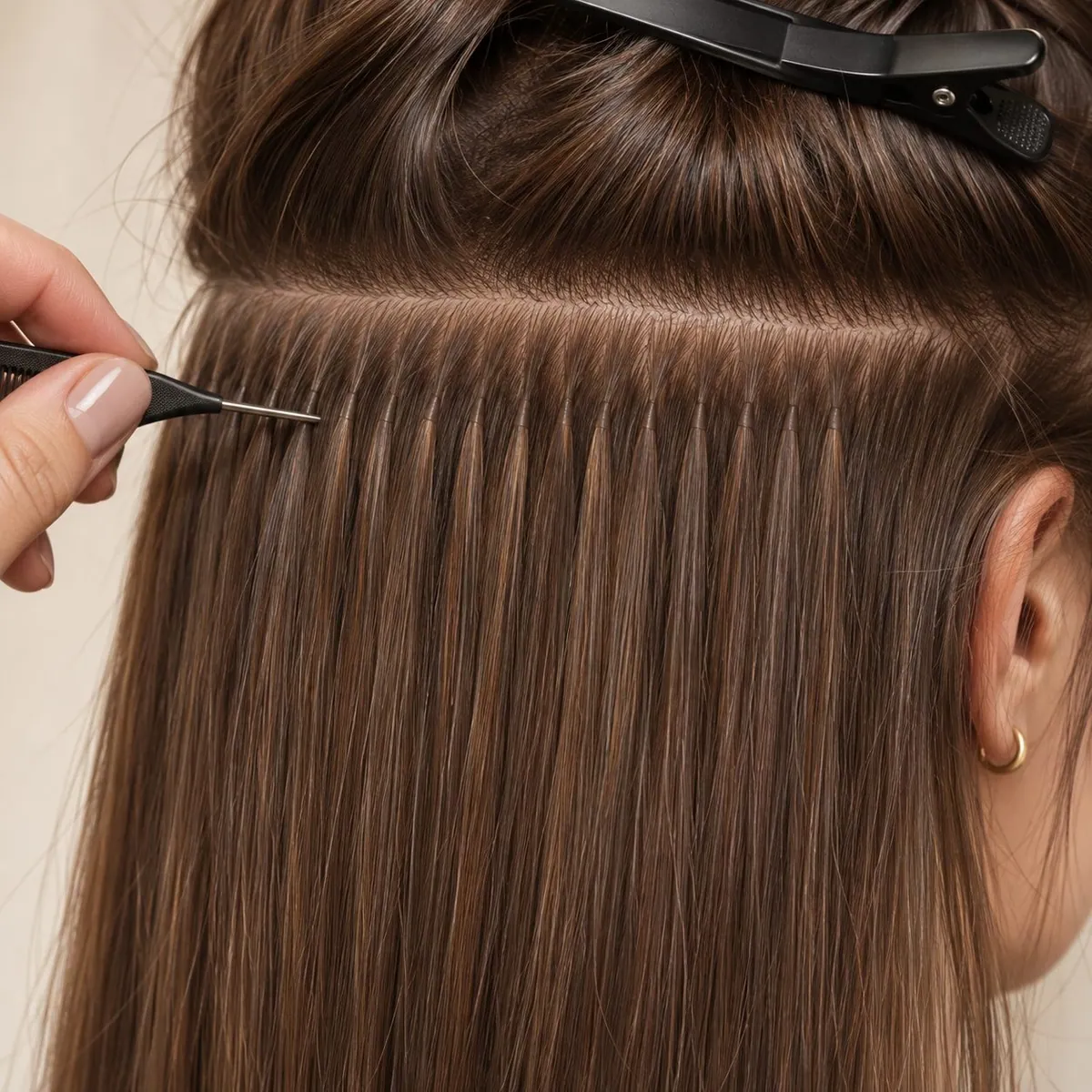
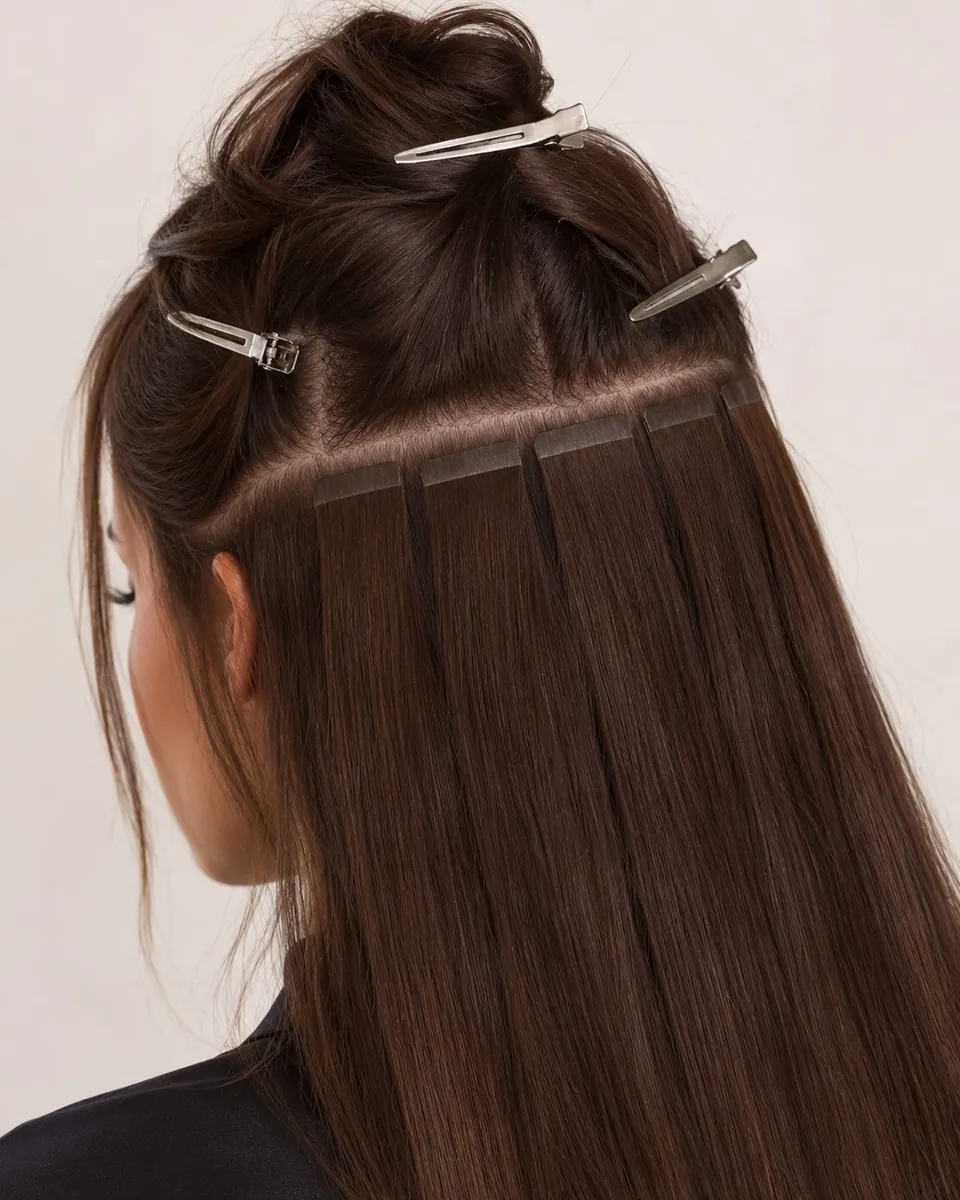
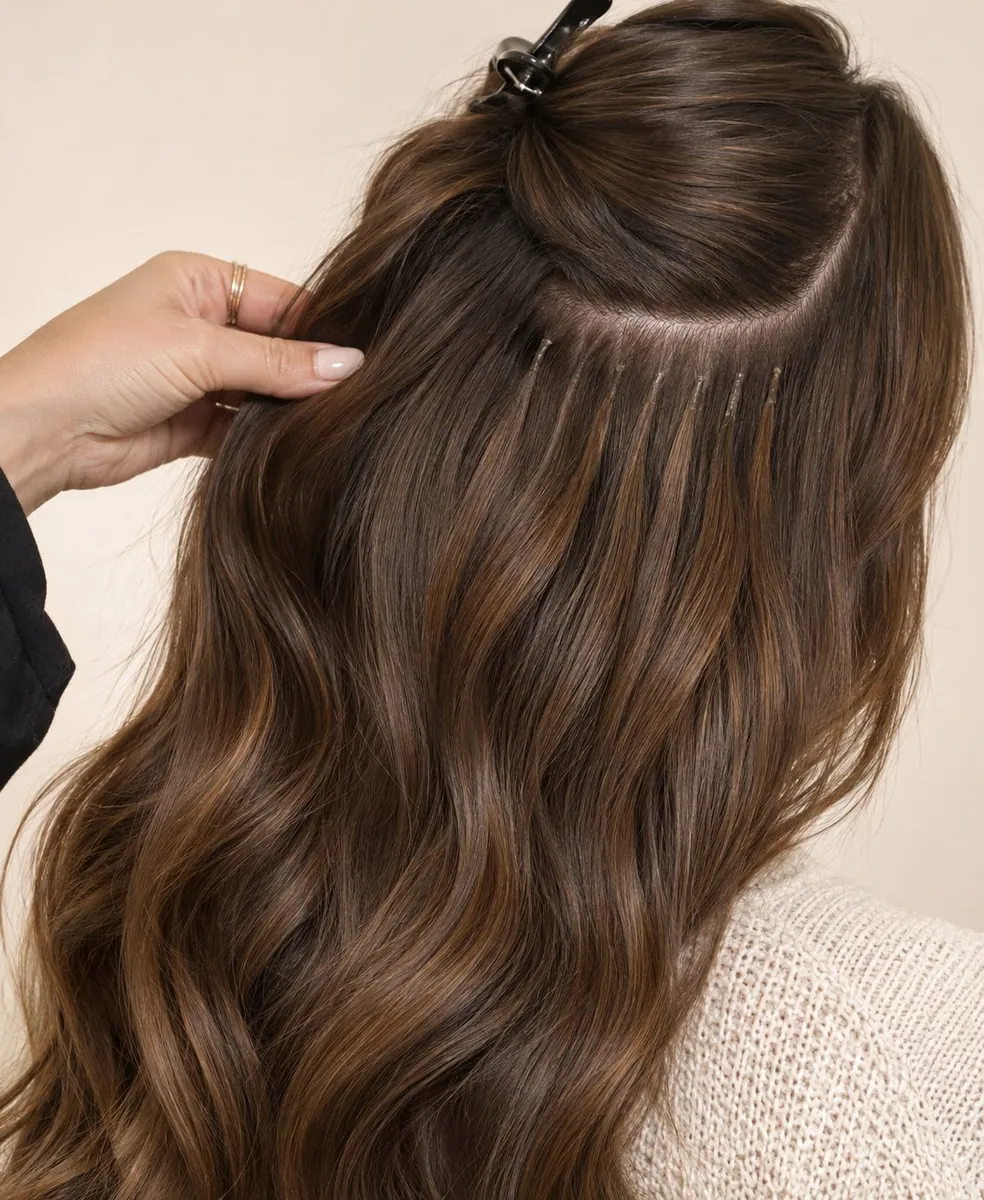
Tape-in extensions: thin wefts sandwiched along a horizontal section at the back of the head

Tape-In

Tape extensions · Hotheads, BELLAMI

Thin wefts with medical-grade adhesive tabs are pressed on either side of a fine slice of your own hair, like a sandwich. Removed with a solvent that dissolves the adhesive.

Wear
6–10 weeks per round
Application
1–1.5 hours
Maintenance
Move-up every 6–10 weeks
Reusable hair
Up to ~3 re-tapes
Investment
●●○○

Benefits

  • Lies flat against the head, very comfortable
  • Fastest semi-permanent application
  • No heat, beads or braiding
  • Hair is reusable across several move-ups

Drawbacks

  • Tabs can show in high ponytails or updos
  • Oils and conditioner near the root loosen adhesive
  • Needs regular move-ups as hair grows

Best for: Fine to medium hair, first-timers, anyone short on chair time
Think twice if: Very oily scalps, frequent high ponytails
Full guide to Tape-In

Strand & bond

Individual strands attached to small sections of hair. The most versatile results.

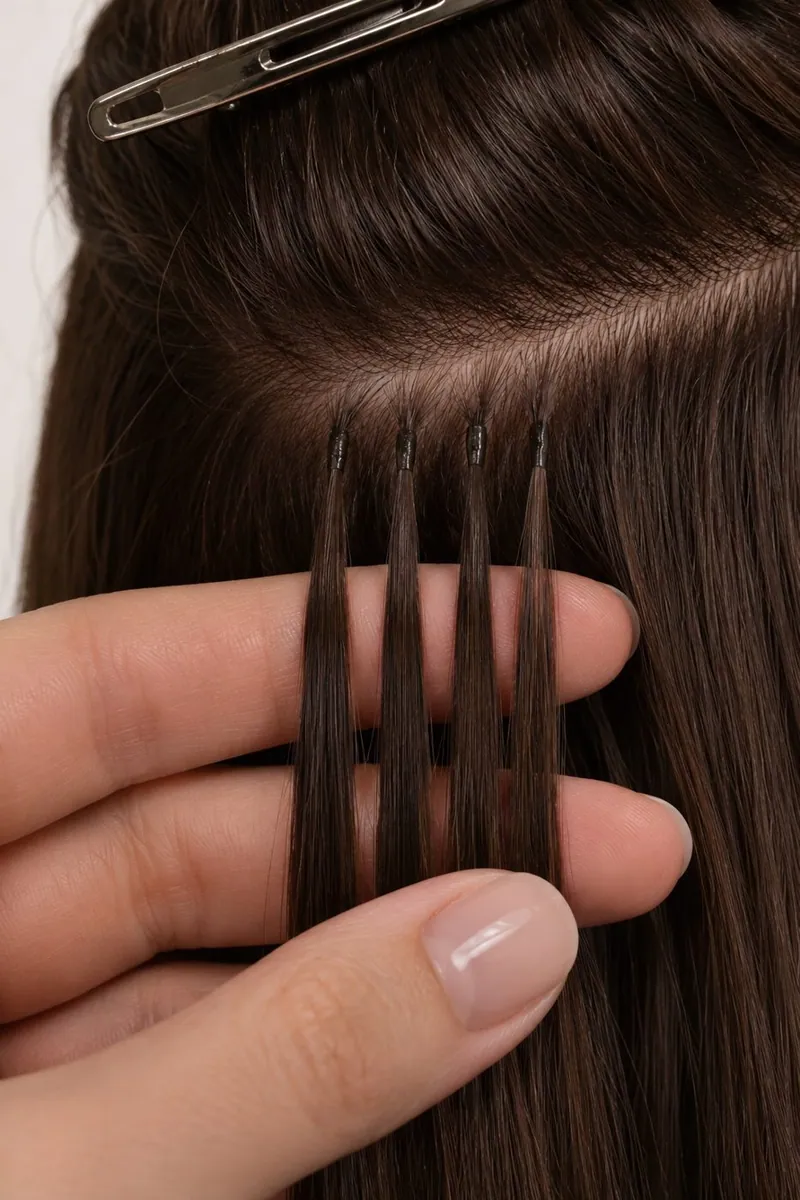
Individual keratin-tipped strands held beside a sectioned row of bonds

Keratin Bond

K-tip · fusion · hot fusion · Great Lengths

Individual pre-tipped strands are fused to small sections of natural hair with a heated tool that softens the keratin-based bond. Removed with a bond solvent and pliers.

Wear
3–5 months
Application
3–5 hours
Maintenance
Check-in every 6–8 weeks, full refit at 3–5 months
Reusable hair
Usually not; new strands each refit
Investment
●●●●

Benefits

  • Most versatile for updos, as strands move individually
  • Longest wear between full appointments
  • Tiny, discreet bonds
  • Strand placement can be customised precisely

Drawbacks

  • Longest application and removal
  • Heat is used near the hair at the root
  • Highest upfront investment
  • Bonds can mat if not dried properly

Best for: Medium to thick hair, updos and high ponytails, long-term wear
Think twice if: Heat-sensitive or very fragile hair, tight budgets

Full guide to Keratin Bond

Fine individual strand extensions attached in a row and blended into long wavy hair

I-Tip

Micro-link · micro-bead · cold fusion

Strands with a hardened stick tip are threaded through a small copper or aluminium bead with your hair, then clamped. No heat, glue or chemicals.

Wear
3–4 months
Application
2–4 hours
Maintenance
Tighten and move up every 6–8 weeks
Reusable hair
Yes, often for several months
Investment
●●●○

Benefits

  • No heat, glue or solvents
  • Strands reusable after move-ups
  • Good movement and updo-friendly
  • Easy adjustment of individual strands

Drawbacks

  • Beads can be felt when sleeping at first
  • Can slip on fine or slippery hair
  • Bead clamped too tightly can stress hair

Best for: Medium to thick hair, those avoiding heat and adhesives
Think twice if: Very fine or very silky hair where beads can slip

Full guide to I-Tip

Very small, closely spaced strand attachments along a sectioned row

Nano Ring

Nano bead · nano tip

Like an i-tip, but with a much smaller tip and ring, which sits closer to the scalp and is almost invisible.

Wear
3–4 months
Application
3–5 hours
Maintenance
Move up every 6–8 weeks
Reusable hair
Yes
Investment
●●●○

Benefits

  • Smallest bead attachment available
  • Good for fine hair and short hairlines
  • No heat or glue

Drawbacks

  • Slow, detailed application
  • Fewer trained specialists
  • Tiny rings can slip on very fine hair

Best for: Fine or shorter hair, very discreet results
Think twice if: Clients who want a quick appointment

Full guide to Nano Ring

Weft systems

Curtains of hair attached along a row. Maximum volume per attachment.

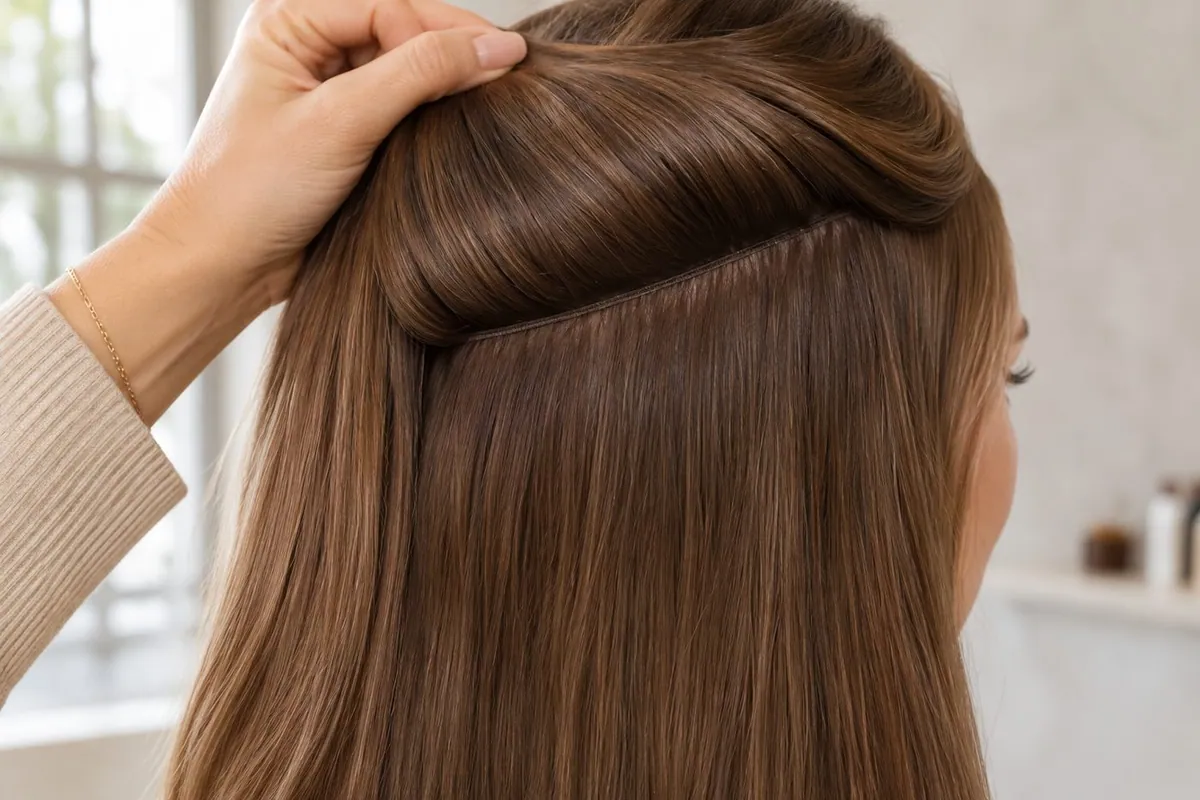
A weft row revealed beneath lifted hair, blended into long straight hair

Hand-Tied Weft

Beaded row · NBR · IBE · sewn weft

Thin hand-tied wefts are sewn or beaded onto a horizontal row of micro-beads, usually in one to three rows. No heat or glue.

Wear
6–10 weeks per move-up
Application
2–3 hours
Maintenance
Move-up every 6–10 weeks
Reusable hair
Yes, wefts last 6–12 months
Investment
●●●○

Benefits

  • Big volume with fewer attachment points
  • No heat, glue or adhesives
  • Wefts are reusable for months
  • Thin, flexible wefts lie flat

Drawbacks

  • Rows can show in high ponytails
  • Weight concentrated on a row of hair
  • Can feel tight for the first days
  • Not for fine or thinning hair

Best for: Medium to thick hair wanting dramatic volume
Think twice if: Very fine hair, sensitive scalps

Full guide to Hand-Tied Weft

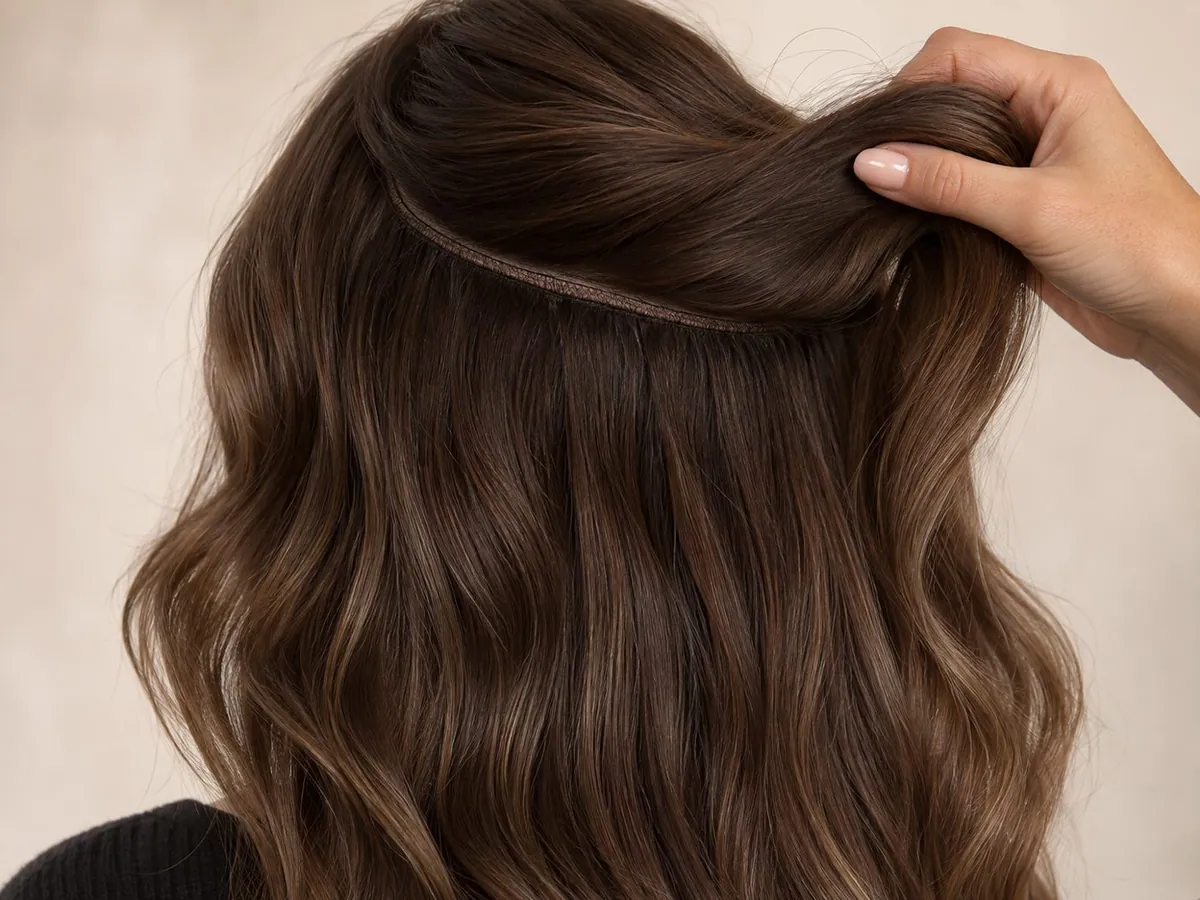
A flat weft sitting under a lifted section of wavy brunette hair

Machine & Genius Weft

Flat weft · genius weft · hybrid weft

Machine-sewn wefts, including new thin “genius” wefts that can be cut to any width without shedding, attached with beads, sewing or tape.

Wear
6–10 weeks per move-up
Application
1.5–3 hours
Maintenance
Move-up every 6–10 weeks
Reusable hair
Yes
Investment
●●○○

Benefits

  • Lower cost than hand-tied wefts
  • Genius wefts can be cut without shedding
  • Dense, even volume

Drawbacks

  • Older machine wefts are bulkier at the seam
  • Same ponytail limits as other wefts

Best for: Medium to thick hair, those wanting weft volume at a lower cost than hand-tied
Think twice if: Very fine hair

Full guide to Machine & Genius Weft

Removable

You put them in and take them out. No salon maintenance.

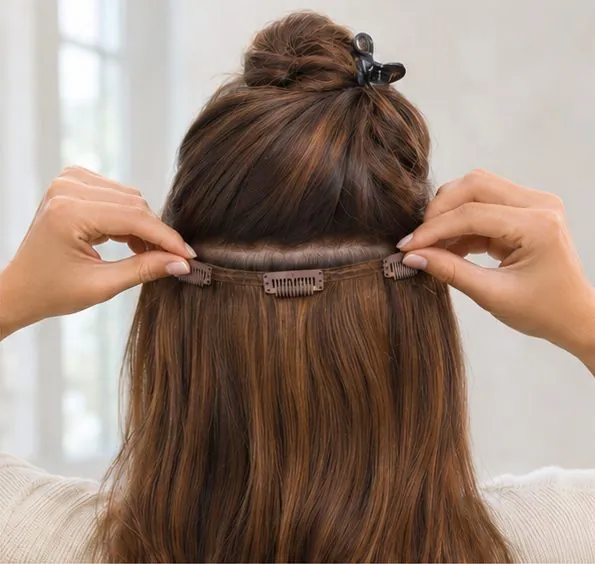
Clip-in weft being placed across the back of the head beneath a sectioned bun

Clip-In

Clip-in wefts

Wefts with small pressure clips that you snap in at home and remove before bed.

Wear
Daily, removed nightly
Application
5–15 minutes yourself
Maintenance
Wash the hair every 15–20 wears
Reusable hair
Yes, 6–12 months
Investment
●○○○

Benefits

  • No salon appointment needed
  • Zero commitment
  • Most affordable entry point

Drawbacks

  • Must be removed every night
  • Clips can be felt, and can pull fine hair
  • Less secure in wind or during sport

Best for: Occasional volume, events, commitment-free trials
Think twice if: Very fine hair if worn daily, as clips can stress the root

Full guide to Clip-In

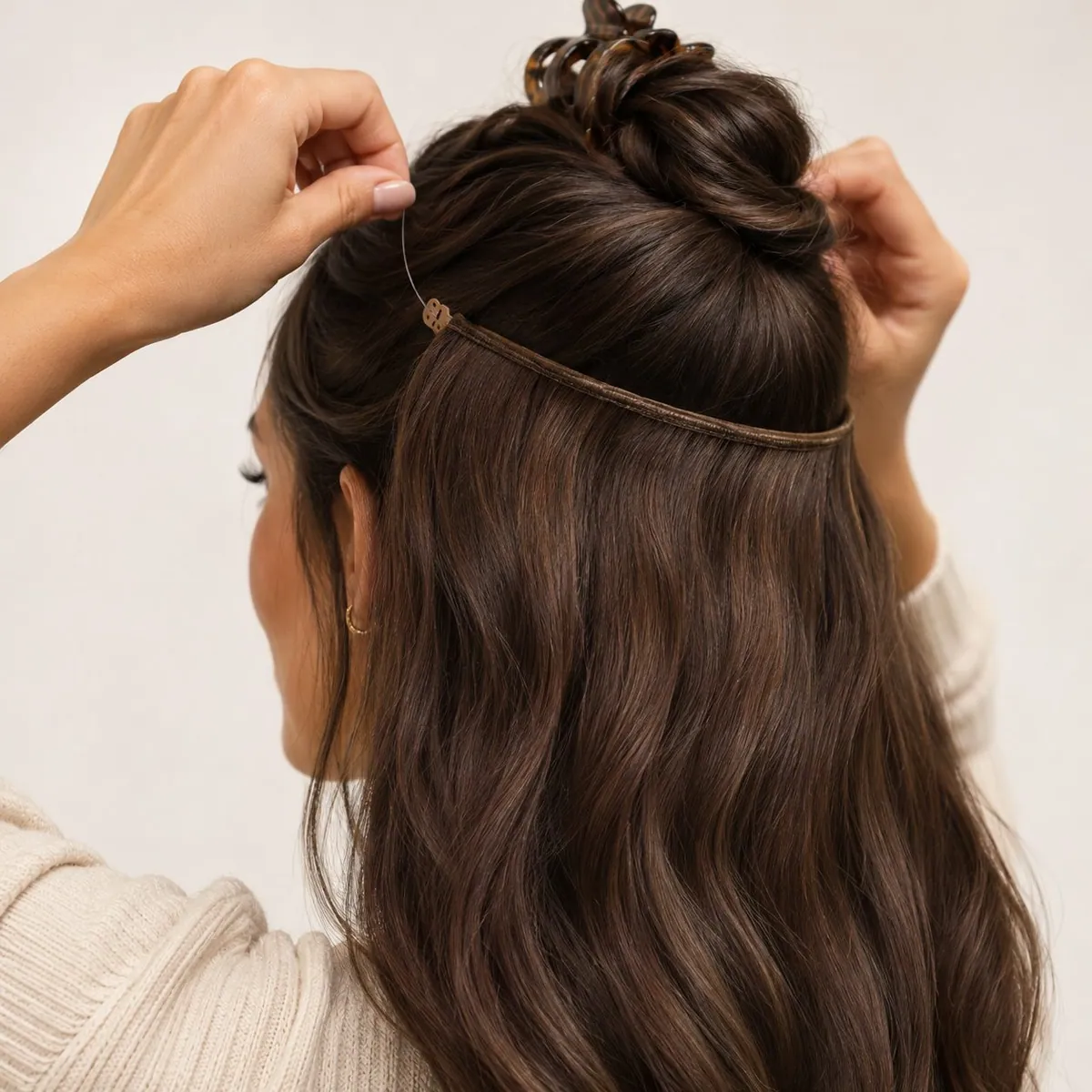
Halo extension wire placed around the crown beneath the top section

Halo

Wire halo · flip-in

One wide weft on an invisible wire that sits on your crown like a headband. Your hair is pulled over it to hide the wire. Nothing attaches to your hair.

Wear
Daily, removed nightly
Application
Under 2 minutes
Maintenance
Minimal
Reusable hair
Yes, 6–12 months
Investment
●○○○

Benefits

  • No attachment, so no stress on your hair
  • Fastest to put on
  • Good for fragile hair

Drawbacks

  • Cannot wear hair up
  • Can shift in wind or exercise
  • Must be removed nightly

Best for: Fine, fragile or thinning hair; anyone avoiding attachment
Think twice if: High ponytails and updos

Full guide to Halo

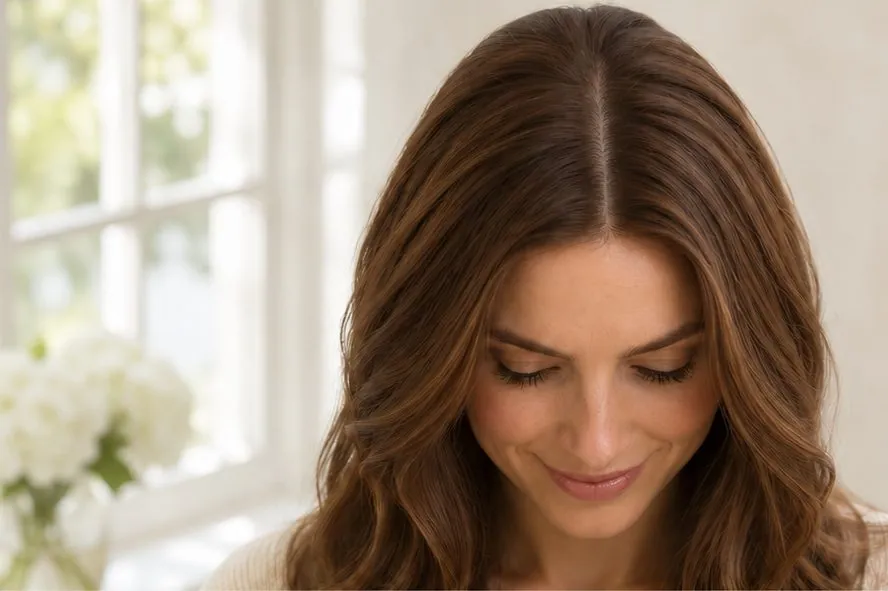
Topper blended at the part, front view, adding volume at the crown

Ponytail & Topper

Wrap ponytails · clip-in toppers

A wrap-around ponytail piece clipped over your own ponytail, or a topper that clips over a thinning crown for volume at the part.

Wear
Daily, removed nightly
Application
Minutes
Maintenance
Minimal
Reusable hair
Yes
Investment
●○○○

Benefits

  • Instant fullness where you need it
  • No commitment
  • Toppers cover a thinning part

Drawbacks

  • Single-style pieces
  • Colour match matters more on toppers

Best for: Event styling; crown thinning (toppers)
Think twice if: Those wanting all-day, all-week wear

Full guide to Ponytail & Topper

At a glance

The comparison

Wear times and application times are typical ranges and vary with growth rate, hair density, aftercare and the amount of hair applied. Your specialist will give you figures for your own hair.

MethodAttachmentWearApplicationMaintenanceBest forInvestment
Tape-InTape systems6–10 weeks per round1–1.5 hoursMove-up every 6–10 weeksFine to medium hair, first-timers, anyone short on chair time●●○○
Keratin BondStrand & bond3–5 months3–5 hoursCheck-in every 6–8 weeks, full refit at 3–5 monthsMedium to thick hair, updos and high ponytails, long-term wear●●●●
I-TipStrand & bond3–4 months2–4 hoursTighten and move up every 6–8 weeksMedium to thick hair, those avoiding heat and adhesives●●●○
Nano RingStrand & bond3–4 months3–5 hoursMove up every 6–8 weeksFine or shorter hair, very discreet results●●●○
Hand-Tied WeftWeft systems6–10 weeks per move-up2–3 hoursMove-up every 6–10 weeksMedium to thick hair wanting dramatic volume●●●○
Machine & Genius WeftWeft systems6–10 weeks per move-up1.5–3 hoursMove-up every 6–10 weeksMedium to thick hair, those wanting weft volume at a lower cost than hand-tied●●○○
Clip-InRemovableDaily, removed nightly5–15 minutes yourselfWash the hair every 15–20 wearsOccasional volume, events, commitment-free trials●○○○
HaloRemovableDaily, removed nightlyUnder 2 minutesMinimalFine, fragile or thinning hair; anyone avoiding attachment●○○○
Ponytail & TopperRemovableDaily, removed nightlyMinutesMinimalEvent styling; crown thinning (toppers)●○○○

Brands worth knowing

Great Lengths

Pre-bonded keratin strands. Great Lengths says it patented its synthesized keratin bond in 1992, designed to expand and contract with natural hair when wet and dry, and requires stylists to complete certification before applying it.

Hotheads

Tape-in extensions with thin adhesive tabs sandwiched around a slice of natural hair. Quick to apply and reusable across several move-ups.

BELLAMI Professional

Tape-ins, i-tips, k-tips, hand-tied and machine wefts, plus clip-ins and halos. BELLAMI publishes a stylist locator, which powers the listings in Find a Salon.